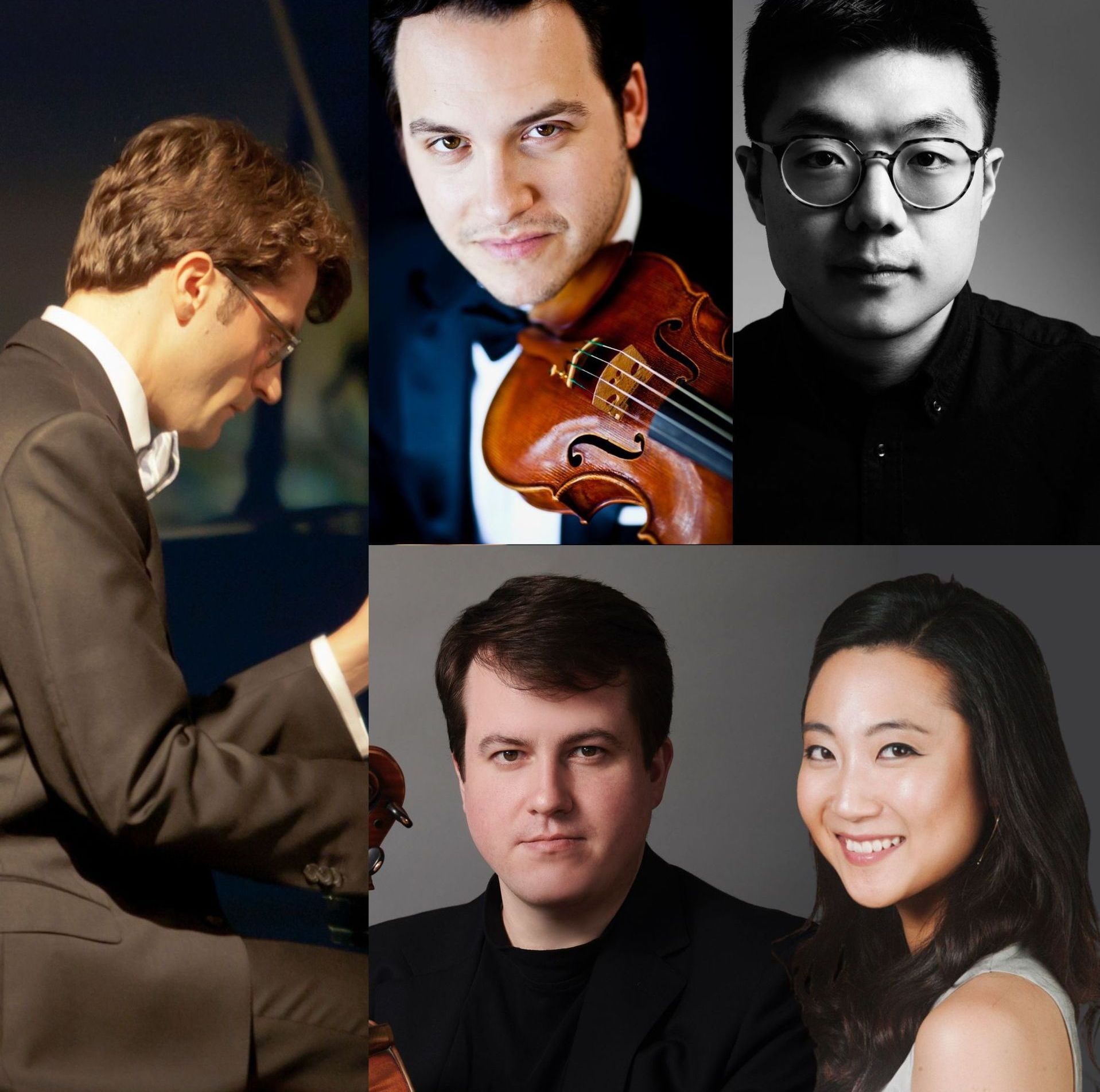
It is not full orchestra, band, choir, rap, rock, jazz, muzak, electronic, hip hop, folk, reggae, opera, pops.
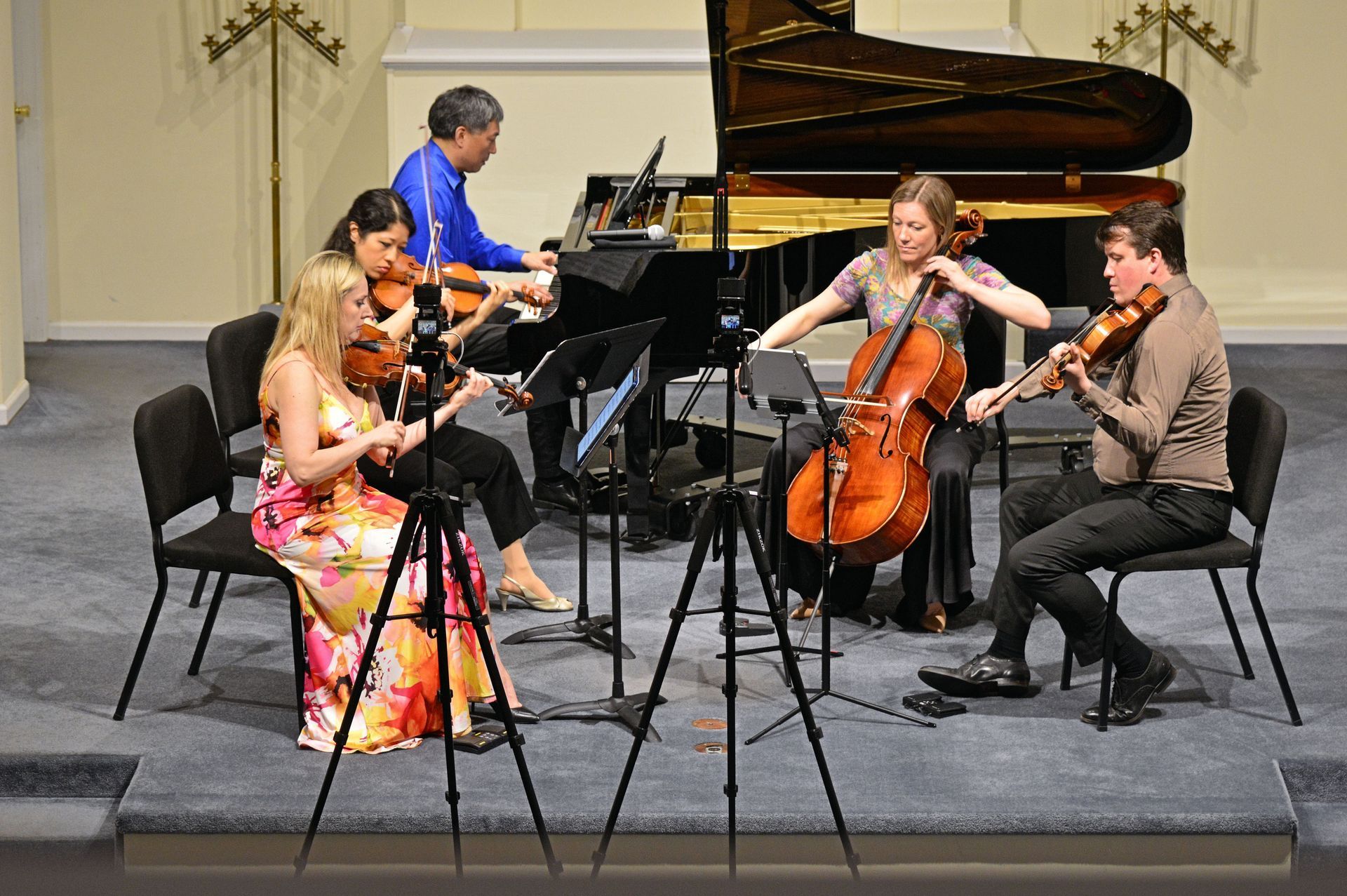
Chamber music is typically classical music performed by a small ensemble in a room that is noticeably smaller than a concert hall. The musicians each play their own part, unlike the sections in an orchestra or band where several musicians play the same part.
Music at Bunker Hill has presented many soloists, duos, trios and quartets, and audience members enjoy watching and listening to each player in turn. Pictured above is a piano quintet, which is string quartet plus piano. The instrumentation consists of two violins, viola, cello, piano.
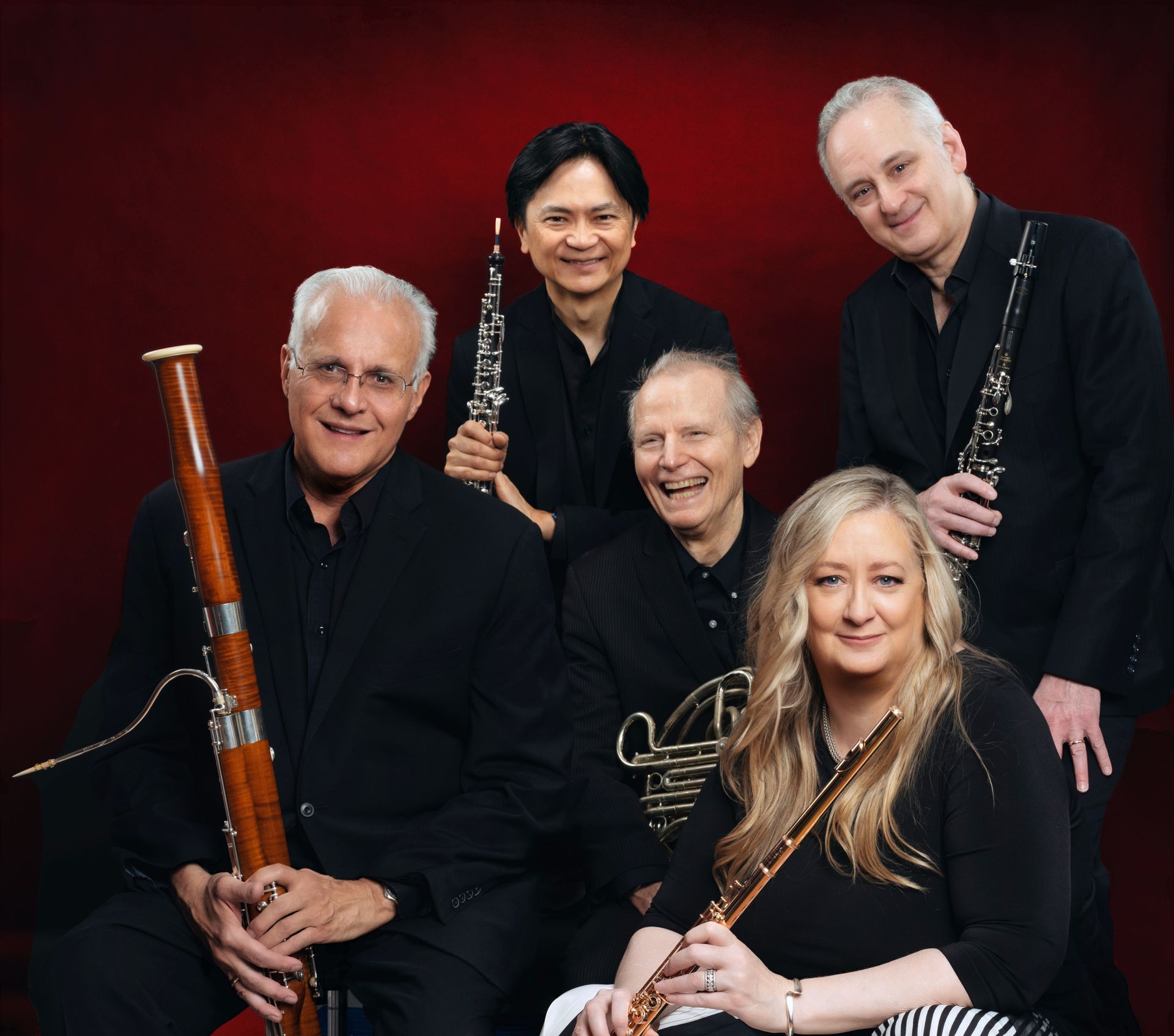
We have also presented woodwind and brass quintets and various other small ensembles.
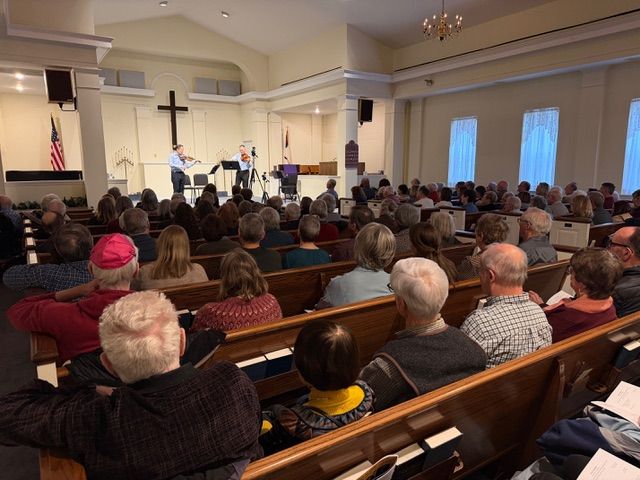
Our small hall lends itself to the intimate nature of chamber music. With only a handful of musicians, you can focus on a particular player and see how they fit in. Beginner listeners can see and hear what is going on even if they are new to classical chamber music. Audience members have remarked that they can even hear the performers breathe.
Where do you start to appreciate chamber music? The printed program gives information about performers and music. Next, focus on each musician and their instrument (including voice). Generally, the larger instruments will have deeper sounds and the smaller instruments will have a higher playing range. It is so interesting to see the ways musicians communicate with their eyes or a small gesture.
Classical chamber music, like opera and ballet, might be considered too lofty for a beginner to appreciate, but that is not the case. Once the beginner takes the first step to experience classical music, understanding and appreciation will soon follow.